The most efficient way to withdraw money from your bank account is by using an ATM. You can use a Debit card or an ATM card; each is associated with a different type of bank account. Debit cards are used to make purchases from a checking account, and can also be used at an ATM..
Similarly, you may ask, can you go into any bank and withdraw money?
If you have a debit card from one bank, you usually can use it at another bank's ATM to withdraw cash. In some cases, if the banks are part of a network that allows you to do so, you may even be able to use another bank's ATMs to deposit money.
Furthermore, how do you withdraw money from an online bank? How to Withdraw Cash From an Online Bank
- Use an ATM. Many online banks are affiliated with nationwide automated teller networks like Plus or Star.
- Get Cash Back at a Store.
- Transfer Funds Online.
- Send a Wire Transfer.
- Make a Phone Call.
Beside this, how much money can you withdraw from a bank?
Daily ATM withdrawal limits can range from $300 up to $2,000 a day, depending on the bank and the account; some banks charge different amounts depending on which tier of service you've signed up for. You'll need to check with your bank to see what exactly your limit is.
Can I withdraw 20000 from bank?
Federal Rules Under these laws, your bank must report any cash withdrawals or deposits of $10,000 or more to the IRS. You aren't allowed to work around the law by making several smaller deposits or withdrawals. Known as structuring, the act of intentionally making small withdrawals to avoid IRS reporting is illegal.
Related Question Answers
What bank has the highest ATM withdrawal limit?
Daily ATM Withdrawal Limits For Top Banks
| Bank | Daily ATM Withdrawal Limit |
| Bank of America | $1,000 |
| Citibank | $1,000* |
| Wells Fargo | $300 |
| U.S. Bank | $500 |
How much money can you withdraw from an ATM in one day?
The daily ATM withdrawal limits for premium accounts tend to be higher than for basic accounts. For example, Citibank's regular checking account has a $1,000 daily withdrawal limit and $5,000 daily debit card payment limit.What is the withdrawal limit for ATM?
ATM Withdrawal Limits. It's increasingly rare to use cash but sometimes you will, and you might need more than the automated teller machine (ATM) daily withdrawal allowance (typically $300 or $500).Can I withdraw large amount of cash?
Federal law allows you to withdraw as much cash as you want from your bank accounts. It's your money, after all. Take out more than a certain amount, however, and the bank must report the withdrawal to the Internal Revenue Service, which might come around to inquire about why you need all that cash.Can I get a cash advance on my debit card?
Yes, you can use your debit card to get a cash advance.Instead of adding funds to a revolving balance, a debit card cash advance withdraws that money directly from your checking account. To take out a debit card cash advance, all you need to do is go to a local bank or credit union branch and talk to a teller.Who gives the most cash back?
Stores That Give the Most Cash Back at the Register: - Albertson's: you can get $100-$300 with a debit card.
- Food Lion: you can get $200 with a debit card and $50 with a personal check.
- Safeway: you can get $200 with a debit card.
- Save Mart Supermarkets: you can get $200-$300 with a debit card (varies by location).
Can I deposit cash at any ATM?
Can you deposit cash at any ATM? No, not all ATMs accept cash deposits. You also need to deposit cash into an ATM from a bank that you have an account with in order to deposit the funds into your account.How much cash can I withdraw from a bank before red flag?
Withdrawals of $10,000 cash or more in the same day raise a red flag and must legally be reported by the bank. Multiple withdrawals in the same day are considered to be the same transaction, so withdrawing $5,000 in the morning and $5,000 later in the day would satisfy the $10,000 required for the bank to report it.How much money can I transfer without being flagged?
By law, banks report all cash transactions that exceed $10,000 — and any transaction of any amount that alerts their suspicions. Money transfer businesses, which often solely send money between countries, sometimes have reporting thresholds as low as $1,000.How much cash can you spend without raising a red flag?
Cash transactions are tracked and if it's over $10,000 the bank will file a CTR (currency transaction report). This is going to happen, there's nothing you can do about it. Often people think that if they break up the deposits into amounts less than $10,000, they can avoid triggering the filing requirement by the bank.Does Bank report to IRS?
Financial institutions have to report large deposits and suspicious transactions to the IRS. Your bank will usually inform you in advance of submitting Form 8300 or filing a report with the IRS. The Currency and Foreign Transactions Reporting Act helps prevent money laundering and tax evasion.Can I deposit 50000 cash in bank?
The Income Tax Act on cash giftsThis means that if you receive cash gifts less than Rs 50,000, you can deposit it in your bank account without any worry about paying tax on it. Bear in mind though, that this Rs 50,000 isn't for one transaction, but the total sum of cash gifts received during the year.Can I withdraw 1 million dollars from a bank?
You will have to wait for your money if you want to withdraw a large sum because the bank many not have the kind of cash you want to withdraw in their vault. A packet of one hundred $100 bills is less than 1/2″ thick and contains $10,000. A million dollars is only 100 of these little things.How much can you put in the bank without questions?
Under the Bank Secrecy Act, banks and other financial institutions must report cash deposits greater than $10,000. But since many criminals are aware of that requirement, banks also are supposed to report any suspicious transactions, including deposit patterns below $10,000.Does the IRS know how much money I have in the bank?
The Short Answer: Yes. The IRS probably already knows about many of your financial accounts, and the IRS can get information on how much is there. But, in reality, the IRS rarely digs deeper into your bank and financial accounts unless you're being audited or the IRS is collecting back taxes from you.How much can you withdraw from a bank without being reported?
How Much Can I Withdraw From My Savings Account Without It Being Reported to the IRS? Financial institutions are required to report cash withdrawals in excess of $10,000 to the Internal Revenue Service. Generally, your bank does not notify the IRS when you make a withdrawal of less than $10,000.How do I put cash in my bank account?
When you deposit cash at a bank or credit union, you typically need to use a deposit slip. That's simply a slip of paper that tells the teller where to put the money. Write your name and account number on the deposit slip (deposit slips are usually available at the lobby or drive-through).How do I get money out of my savings account?
Basic savings accounts are often linked to checking accounts, so many major banks allow you to withdraw at the ATM. Insert your ATM debit card, enter your pin, select savings account, and enter the amount you would like to withdraw.Can you take money out of ATM without money in account?
In the above process, you can withdraw cash from an ATM without using a debit card. However, if you want to transfer money to a person (beneficiary) who does not have a savings account with the bank, you can do that too. Further, the beneficiary can also make cardless cash withdrawals from an SBI ATM. 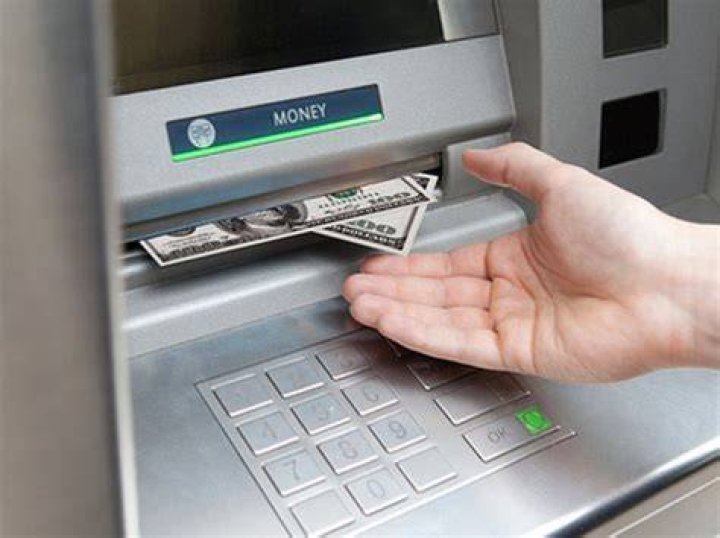
 Sarah Parker