How long does it take for Oral Lichen Planus to go away?
 Robert Miller
 .
In this regard, how Long Does Oral Lichen Planus take to heal?
The lesions of cutaneous lichen planus typically resolve within 1-2 years, whereas the reticular forms of oral lichen planus have a mean duration of 5 years and erosive lesions of oral lichen planus are long-lasting and persist for up to 15-20 years or longer.
Additionally, what is the best treatment for Oral Lichen Planus?
- topical corticosteroids, which can come in the form of gel, ointment, or mouthwash applied directly to the affected area.
- injection corticosteroids, which are applied directly to the lesion.
- oral corticosteroids, which can only be taken for a short time.
- immune response medications.
Accordingly, is Oral Lichen Planus curable?
Oral lichen planus is a chronic condition. There is no cure, so the treatment focuses on helping severe lesions heal and reducing pain or other discomfort. If you have no pain or discomfort and if only white, lacy lesions are present, you may not need any treatment.
What triggers Oral Lichen Planus?
With oral lichen planus, some doctors believe those cells get confused and attack the lining of your mouth. Other possible triggers include medicines like painkillers, high blood pressure treatments, diabetes drugs, and malaria medications. It may also be a reaction to metal, such as dental fillings.
Related Question Answers
What can I eat with Oral Lichen Planus?
When the lesions are symptomatic, patients may avoid certain foods that may aggravate the symptoms. They are often on a soft diet, which may be a predominantly carbohydrate diet. Advise patients with oral lichen planus (OLP) that a diet rich in fresh fruit and vegetables may help reduce the risk of oral SCC.What does oral lichen planus look like?
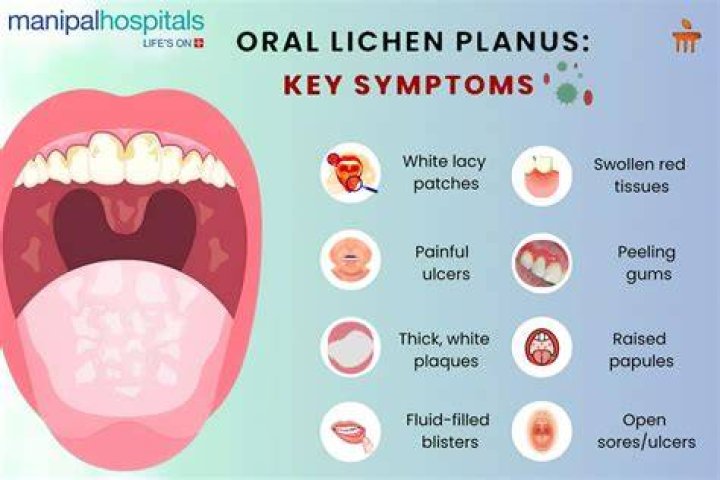
Typically, oral lichen planus looks like a white, lace-like pattern on the inner surfaces of the cheeks and tongue, which may also be swollen and bright red. However, it can appear as white and red patches or as areas of sores (ulceration) on the lining of the mouth.How do you get rid of Lichen Planus fast?
Treatment for severe cases of lichen planus may include the following:- Antihistamines may be used to reduce itching and are available for purchase online.
- Phototherapy with ultraviolet (UV) light can also be used to reduce symptoms.
- Steroid creams or ointments can be very effective in reducing inflammation and redness.
What can you not eat in Lichen Planus?
Foods to avoid for lichen sclerosis- spinach, raw and cooked.
- canned pineapple.
- many boxed cereals.
- dried fruit.
- rhubarb.
- rice bran.
- bran flakes.
- soy flour.
What drugs can cause oral lichen planus?
Some people develop oral lichen planus after taking certain medications, such as beta-blockers and nonsteroidal anti-inflammatory drugs (NSAIDs). Diseases such as hepatitis B and primary biliary cirrhosis may also cause oral lichen planus.Does Vitamin D Help With Lichen Planus?
Vitamin D being a strong immune modulator the authors feel that further studies are needed to confirm the role of vitamin D in the expression and manifestations of lichen planus which may help us to deliver better treatment for lichen planus.Is turmeric good for Oral Lichen Planus?
decades has shown that curcumin is a potent anti-inflammatory agent with strong therapeutic potential against a variety of cancers. The curcumin is found to be an effective treatment in oral lichen planus even in the cases where topical steroids have been used and recurrence was seen.Is Oral Lichen Planus a fungus?
Lichen planus is a relatively common inflammatory disease that affects the skin and/or inside the mouth, resulting in distinctive skin and/or oral lesions. Lichen planus of the skin usually causes itching. It is important to note that lichen planus itself is not an infectious disease.What doctors treat Oral Lichen Planus?
Doctors usually treat more severe cases of oral lichen planus with one or several medications, including:- Lidocaine (Lidoderm®, Xylocaine®)
- Tacrolimus (Prograf®, Protopic®)
- Corticosteroids.
- Dapsone (Aczone®)
- Cyclosporine (Neorral®, Gengraf®)