What are the different types of atoms?
 Nathan Sanders
 - Description. Atoms are made of tiny particles called protons, neutrons and electrons.
- Stable. Most atoms are stable.
- Isotopes. Every atom is a chemical element, like hydrogen, iron or chlorine.
- Radioactive. Some atoms have too many neutrons in the nucleus, which makes them unstable.
- Ions.
- Antimatter.
.
In this way, how many types of atoms are there?
There are more than 109 different types of atom - one for each element. Differences between the atoms give the elements their different chemical properties. In 2001, there were 115 known elements.
why are there different types of atoms? Isotopes: Different Types of Atoms. Atoms in a chemical element that have different numbers of neutrons than protons and electrons are called isotopes. Because it has the same number of protons as electrons, the hydrogen atom is neutral (the positive and negative charges cancel each other out).
Consequently, what are the three types of atoms?
Atoms are made up of three kinds of smaller particles, called protons (which are positively charged), neutrons (which have no charge) and electrons (which are negatively charged). The protons and neutrons are heavier, and stay in the middle of the atom. They are called the nucleus.
What are atoms in?
An atom a fundamental piece of matter. An atom itself is made up of three tiny kinds of particles called subatomic particles: protons, neutrons, and electrons. The protons and the neutrons make up the center of the atom called the nucleus and the electrons fly around above the nucleus in a small cloud.
Related Question Answers
How big is a atom?
An atom is the smallest constituent unit of ordinary matter that constitutes a chemical element. Every solid, liquid, gas, and plasma is composed of neutral or ionized atoms. Atoms are extremely small; typical sizes are around 100 picometers (1×10⁻¹⁰ m, a ten-millionth of a millimeter, or 1/254,000,000 of an inch).Who discovered atom?
Democritus
How do atoms work?
Most atoms have three different subatomic particles inside them: protons, neutrons, and electrons. The protons and neutrons are packed together into the center of the atom (which is called the nucleus) and the electrons, which are very much smaller, whizz around the outside. Most of an atom is empty space.How small is an electron?
The classical electron radiusIt has a value of 2.82x10⁻¹⁵ m. That's certainly small. Now compare this with the measured radius of a proton, which is 1.11x10⁻¹⁵ m [3]. According to this an electron has a radius 2.5 times larger than a proton.What is a model of an atom?
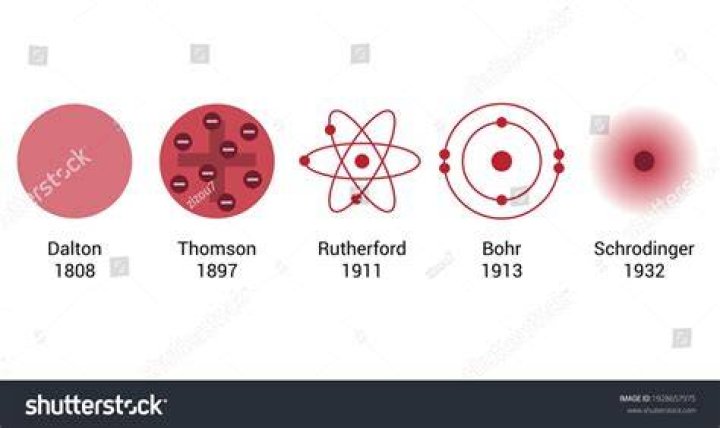
A model is a representation of a system in the real world. Models help us to understand systems and their properties. For example, an atomic model represents what the structure of an atom could look like, based on what we know about how atoms behave.How are atoms named?
Atoms were impenetrably hard, meaning they could not be divided. In Greek, the prefix "a" means "not" and the word "tomos" means cut. Our word atom therefore comes from atomos, a Greek word meaning uncuttable. The word is derived from the Greek word "atomos", meaning indivisible.Is a germ smaller than an atom?
Germs certainly meet that criteria. Of course, germs are tiny and impossible to see without some tool to amplify our senses, BUT they are huge compared to the atoms that make up those germs. Those atoms are also matter and are even smaller and harder to see than germs.What is the smallest part of an element?
An atom is the smallest unit of matter that has the properties of an element. It is composed of a dense core called the nucleus and a series of outer shells occupied by orbiting electrons. The nucleus, composed of protons and neutrons, is at the center of an atom.How many atoms are in a molecule?
1 Answer. Molecule: group of two or more atoms held together by chemical bonds. So, minimum 2 atoms are required to form a molecule. E.g. An oxygen molecule ( O2 ) contains 2 oxygen atoms.What does C stand for on the periodic table?
carbon