What is git flow in SourceTree?
 David Jones
 .
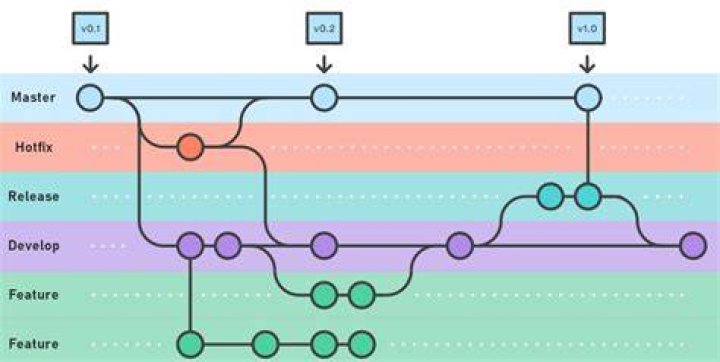
Accordingly, what is the git flow?
Vincent Driessen's "git flow" branching model is a git branching and release management workflow that helps developers keep track of features, hotfixes and releases in bigger software projects. If you run git branch after setting up, you'll notice that you switched from the master branch to a new one named develop .
One may also ask, how do I use Gitflow? To start a release, use the git flow release command. It creates a release branch created from the 'develop' branch. You can optionally supply a [BASE] commit sha-1 hash to start the release from. The commit must be on the 'develop' branch.
Also know, what is git flow init?
Git-flow is a wrapper around Git. The git flow init command is an extension of the default git init command and doesn't change anything in your repository other than creating branches for you.
Why is Gitflow bad?
Right, it's gitflow. Bad engineering practices often result in late and unpredictable deployment discussed above. So common reason says that your test suite should contain not only unit tests but at least functional tests. It automatically means that QA team should start to write their tests as soon as possible.
Related Question Answers
What is the purpose of Git?
The purpose of Git is to manage a project, or a set of files, as they change over time. Git stores this information in a data structure called a repository. A git repository contains, among other things, the following: A set of commit objects.What is the best Git workflow?
5 Git workflow best practices you've got to use [2019]- Rebase Git workflow. When you've finished a feature on a local branch and it's time to commit your changes to the master branch, you might prefer merging over rebasing.
- git add -p.
- Keeping your branches tidy.
- Git reset-hard.
- Escape greater than symbols:
What is git origin?
In Git, "origin" is a shorthand name for the remote repository that a project was originally cloned from. More precisely, it is used instead of that original repository's URL - and thereby makes referencing much easier. Note that origin is by no means a "magical" name, but just a standard convention.What is git strategy?
Choose the right Git branching strategy. Git is a fantastic tool. Source control tools provide several vital features: a place to keep code, a history of changes, and information about who did what and when. If you and your team are good with commit messages, you may even get bonus info about why a change was made.What is git checkout?
The git checkout command lets you navigate between the branches created by git branch . Checking out a branch updates the files in the working directory to match the version stored in that branch, and it tells Git to record all new commits on that branch.What is git flow AVH?
git-flow AVH Edition is a collection of Git extensions to provide high-level repository operations for Vincent Driessen's branching model. The AVH Edition adds more functionality to the existing git-flow and several of the internal commands have been rewritten to speed up the software.How do I manage Git releases?
Software release management with git- master, the main branch, only one master branch should exist.
- develop, the development branch, only one develop branch should exist.
- test branch, there could have multiple test branches.
- feature branch, there could have multiple feature branches.
- release branch, there could have multiple release branches.
What are different branching strategies?
Branching Strategies- Trunk-based Development (No Branching)
- Release Branching.
- Feature Branching.
- Story or Task Branching.
- Manual Code Review and Merge.
- Minimal Continuous Integration.
- Continuous Integration Pipeline with Quality Gates.
What is Git and how it works?
Git is a Distributed Version Control tool that is used to store different versions of a file in a remote or local repository. It is used to track changes in the source code. It allows multiple developers to work together. A VCS allows you to keep every change you make in the code repository.What is git rebase?
What is a rebase in Git? In Git, the rebase command integrates changes from one branch into another. It is an alternative to the better known "merge" command. Most visibly, rebase differs from merge by rewriting the commit history in order to produce a straight, linear succession of commits.What is branching and merging in Git?
Branching and merging. I touched on just a few things about git. In particular, pay attention to: Branching: Create a separate branch to develop a feature (or work on a bug) without disturbing the master branch. If it works out, you can merge it back into the master; if it doesn't, you can trash it.What is a master branch?
A branch in Git is simply a lightweight movable pointer to one of these commits. The default branch name in Git is master . As you start making commits, you're given a master branch that points to the last commit you made. Every time you commit, the master branch pointer moves forward automatically. Note.What is the most popular branching strategy in git?
What is the most popular branching strategy in GIT? There are many ways to do branching in GIT. One of the popular ways is to maintain two branches: I.
And is integrated into many git clients including the command line client:
- SourceTree.
- GitKraken.
- And Others.
What are the branching strategies in git?
Git Branching Strategies: which one should I pick?- Feature branches – Feature/Topic branches are often a branch of the origin/develop branch and used to work on features for the next or future releases.
- Release branches – These are usually a branch from a point-in-time of the origin/develop where it's deemed ready for a release.
What is merge conflict in git?
A merge conflict is an event that occurs when Git is unable to automatically resolve differences in code between two commits. When all the changes in the code occur on different lines or in different files, Git will successfully merge commits without your help.What is the first step of the GitHub flow?
Understanding the GitHub flow- Create a branch. When you're working on a project, you're going to have a bunch of different features or ideas in progress at any given time – some of which are ready to go, and others which are not.
- Add commits.
- Open a Pull Request.
- Discuss and review your code.
- Deploy.
- Merge.