Which article specified that Congress could not prohibit the importation of slaves into the United States until 1808?
 Robert Miller
 .
Similarly, you may ask, what effect does Article 1 have on slavery?
Article 1, Section 9, Clause 1, is one of a handful of provisions in the original Constitution related to slavery, though it does not use the word “slave.” This Clause prohibited the federal government from limiting the importation of “persons” (understood at the time to mean primarily enslaved African persons) where
One may also ask, how did the constitution handle the issue of slavery? Slavery was implicitly permitted in the original Constitution through provisions such as Article I, Section 2, Clause 3, commonly known as the Three-Fifths Compromise, which detailed how each slave state's enslaved population would be factored into its total population count for the purposes of apportioning seats in
Thereof, what did Congress outlawed in 1808?
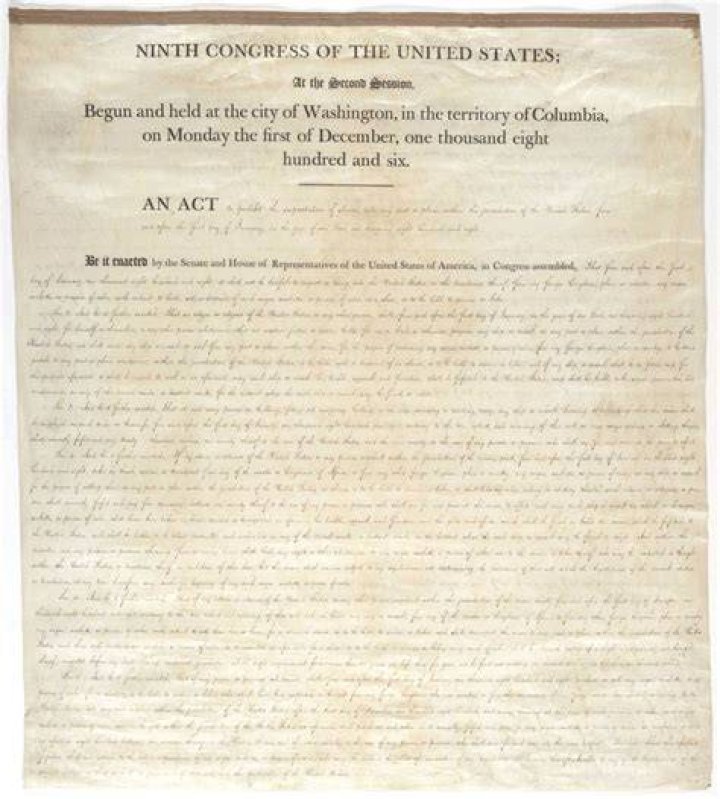
Congress votes to ban slave trade: March 2, 1807. On this day in 1807, Congress enacted a law to “prohibit the importation of slaves into any port or place within the jurisdiction of the United States from any foreign kingdom, place or country.” The ban took effect on Jan. 1, 1808.
What does Article 1 Section 9 Clause 8 of the Constitution mean?
The Title of Nobility Clause is a provision in Article I, Section 9, Clause 8 of the United States Constitution, that prohibits the federal government from granting titles of nobility, and restricts members of the government from receiving gifts, emoluments, offices or titles from foreign states and monarchies without
Related Question Answers
What is Article 1 Section 3 of the Constitution about?
Section 3. 1: Treason against the United States, shall consist only in levying War against them, or in adhering to their Enemies, giving them Aid and Comfort. No Person shall be convicted of Treason unless on the Testimony of two Witnesses to the same overt Act, or on Confession in open Court.What is Article 1 of the Constitution mainly about?
Article One of the United States Constitution. Article One of the United States Constitution establishes the legislative branch of the federal government, the United States Congress. Article One grants Congress various enumerated powers and the ability to pass laws "necessary and proper" to carry out those powers.Who abolished slavery?
The 13th amendment, which formally abolished slavery in the United States, passed the Senate on April 8, 1864, and the House on January 31, 1865. On February 1, 1865, President Abraham Lincoln approved the Joint Resolution of Congress submitting the proposed amendment to the state legislatures.Which eight powers does Article 1 Section 9 deny Congress?
No State shall enter into any Treaty, Alliance, or Confederation; grant Letters of Marque and Reprisal; coin Money; emit Bills of Credit; make any Thing but gold and silver Coin a Tender in Payment of Debts; pass any Bill of Attainder, ex post facto Law, or Law impairing the Obligation of Contracts, or grant any TitleWhat does Article 2 of the Constitution mean?
Article Two of the United States Constitution establishes the executive branch of the federal government, which carries out and enforces federal laws. Section 1 of Article Two establishes the positions of the president and the vice president, and sets the term of both offices at four years.How much power does Congress have?
Congress has authority over financial and budgetary matters, through the enumerated power to lay and collect taxes, duties, imposts and excises, to pay the debts and provide for the common defense and general welfare of the United States.What does Article I say?
Article I describes the design of the legislative branch of US Government -- the Congress. Important ideas include the separation of powers between branches of government (checks and balances), the election of Senators and Representatives, the process by which laws are made, and the powers that Congress has.Which president signed a bill banning the importation of slaves to the US?
President Thomas Jefferson
Which state won't agree to the constitution of slavery is abolished?
Colorado Votes To Abolish Slavery, 2 Years After Similar Amendment Failed. Article II, Section 26 of Colorado's Constitution has closely mirrored the U.S. Constitution's 13th Amendment, which states in part: "Neither slavery nor involuntary servitude, except as a punishment for crimeWhen was slavery abolished in the USA?
1865,